Friction as Intent: Why Every Detail Matters
- David Turner

- Aug 14
- 7 min read
Updated: Aug 22

Why Friction Matters in Product Design
On Side 1 of Television’s 1977 LP ‘Marquee Moon’, you’ll hear Tom Verlaine sneer:
“How does a snake get out its skin?
Here's a depiction…”
The answer is of course ‘Friction’, as the song title has already given away.
Use that F word in a tech environment though and people recoil in horror. There are very few concepts more repulsive to a UX designer or Product manager than that of friction. Metrics are dedicated to the elimination of friction in all its unseemly forms; monitored as a groundsman looks for earthworm castings on his wicket before the first over of a test match.
Why the anti-friction movement took hold
The idea, like so many, is rooted in good intentions and linear logic. Remove friction points from a flow and the user is more likely to complete the task, more likely to buy something or sign up to something, more likely to stick around and less likely to rage quit mid-way through the process.
When Jobs wanted to reference the Bauhaus school and Zen Buddhism in product design, it manifested as intuitive UX. Software and Hardware as In-Yō, Shin-Jin Ichinyo realised as premium consumer electronics.
Somewhere along the way though, intuitive UX became a crusade against friction. And in many cases with good reason. If you have a mundane task to complete, like paying tax or a utility bill, you’d rather get it over and done with, consigned to history as a dull memory. If you have to sign up to yet another website or tool, then it’s less hassle to use Google as SSO instead of adding yet another password and username to the list. This is friction removal at its best, exactly where it belongs.
The resurgence of friction and intent
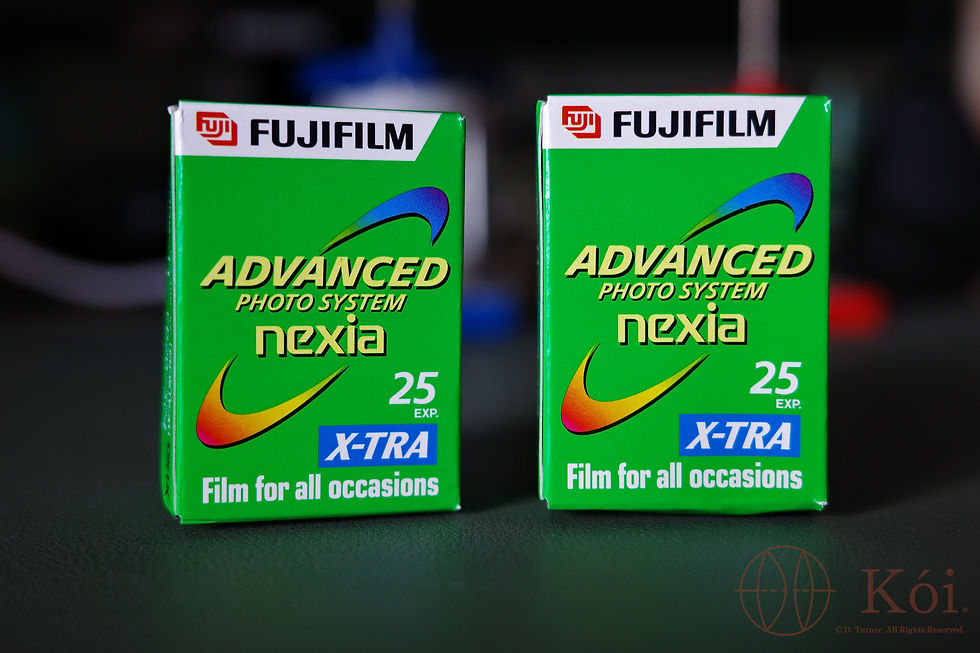
But as In can’t exist without Yō, there’s another side to the eradication of friction. Walk around the hipster-by-numbers edgy neighbourhoods of England and you’ll see young men with mullets toting analogue cameras. Earnestly debating the relative merits of Kodachrome and Portra 400 film stock over their V60 pour-overs.
The resurgence of analogue photography isn’t an anomaly either. There’s been no logical reason for a mechanical watch industry since the introduction of quartz. In an era dominated by phones and smart watches it verges on the absurd. There’s no reason for a Waterstones on every decaying high street - eBooks are cheaper, they don’t collect dust, and you need not ever leave your armchair again to buy them. In fact why even read a book when someone can read it for you over audio?
So it turns out that there is some tacit desire for friction, at least in human psychology. Removing it all made things too easy, too disposable. It removed intent. Mihaly Csikszentmihalyi documented this in 'Flow: The Psychology of Optimal Experience (1990)'. When he talks about the mind 'stretched to its limits in a voluntary effort to accomplish something that is difficult or worthwhile' he's describing what happens when friction is present; when activity becomes autotelic, an end in itself rather than a means to external reward. We're looking at friction as a required element for the human psyche to function optimally. One must imagine Sisyphus happy.
Friction in collecting
Growing up, I was an obsessive collector of trainers (AKA sneakers for our American readers). It was a subculture in those days, one of those odd hobbies that other people didn’t understand. It orbited around other subcultures, mainly from the dual cultural 90’s beacons of music and football. You had to find magazine clippings, old fanzines, books, shops in Liverpool and Manchester and London stocking oddities and old deadstock. In was a pain to find the ‘right’ things for the collection, and meant lots of schlepping around the place.
Then eBay appeared and you had all the deadstock in the world at your disposal. Soon after, the big brands started reissuing their old discontinued models. Then came collaborations, launches became styled as ‘drops’, armies of bots secured limited run pairs for lads who immediately listed them on StockX for a profit. And the market narrowed to a homogenous, metricised dull-fest of Jordans, AF1s and Yeezy Boosts. The lack of friction killed the subculture to the point of irrelevance and a sedentary lifestyle. It collapsed into a pastiche of unrestrained consumerism devoid of intent because it got too easy.
Friction in photography
Apply the same to taking pictures. The old constraints of 36 exposures on a film, non-rechargeable batteries, no editing software to save your mistakes, all made the thing intentful. The friction gave meaning as opposed to the throwaway smartphone pics and filters of today. You can have a hundred-thousand pictures on a camera roll, and not one of them means a thing.
Why anti-friction became the ubiquitous dogma
The reason for the anti-friction movement of digital design largely lies with the usual factors; people saw the success of companies like Apple and wanted to emulate it, or at least felt compelled to copy it in some form. It’s much easier to sell an idea to a board of execs or an institutional investor if you can pin it to something else that worked. It’s totally natural that people do this in the real world whilst navigating competing priorities and opinions.
Friction in automotive
The entire car industry seemed to move away from physical controls when Tesla’s stock climbed the index. And it saved on bill of materials, the automotive product director’s version of friction, to be eliminated and fought at all times. If everyone else is placing a touchscreen tablet in the middle of the dash, why wouldn’t you? Throw a voice assistant in there too, on paper the most frictionless UI possible. Tesla stock rocketed, why wouldn’t yours? It was the trend in an industry that values conformity, benchmarking, and BoM reduction.
But of course it’s never quite simple enough to translate that into what a customer wants, and what they’ll pay for. Much like analogue photography, the car-buying public wanted their friction back - I’ve heard this consistently during my own work around the industry. They wanted a return to tactile switches and controls, to UX grounded in muscle memory, not voice commands and touch screens. They wanted to feel and experience what they’d paid for in a way that worked in a human context, not a quarterly report. Those OEMs tell me they’re now reverting, the customer has spoken. Meanwhile no other automotive stock after Tesla threatened the upper reaches of the indices the whole time.

The Fujifilm model: friction as strategy
So I’ll point to where I think the friction-balance lies, in one of the best product ranges of recent times - Fujifilm X-Series cameras.
Tactile controls and film simulations
In the 2000’s, someone at Fujifilm observed a camera industry that was diverging. Point and shoot was heading for smart phones, serious photography was going to be all about spec sheets. So in 2011, they launched the X-Series. Rangefinder styling and materials, tactile dials allowing muscle-memory exposure-triangle control while shooting. The product hit a sweet spot between specs, aesthetics, materials and UI/UX. Other brands had tried retro-inspired models before (notably Epson's RD1, and Panasonic's Lumix DMC L1) but neither had got the timing and the execution as right as Fujifilm did. The blend of analogue and digital, the pricing, and the top-plate controls.
Those dials are a work of art in themselves; described by Fujifilm as “close to handmade and difficult to mass-produce". Friction.

The X100VI phenomenon
Initially shifting around 100,000 units a year as a ‘boutique retro’ camera, the line has enjoyed growth and a dedicated group of owners - selling 430,000 units in 2023, and 740,000 in 20241. Those figures underpin a strategy of raising brand power and sustaining pricing, edging Fujifilm's positioning toward Leica and away from the ‘big three’ of Canon, Nikon and Sony. One of the more recent models, the X100VI, had demand that created two years of supply shortages, saw a $200 price increase that didn’t dampen that demand, and still sells above RRP in the used market.
Fujifilm’s other inspired move was predicting and embracing the nostalgia for analogue photography, adding Film Simulations based on classics such as Provia, Velvia and Acros. You can export these straight out of the camera as JPEGs, skipping the often mundane process of processing and editing RAW files. Here exists a sweet spot between the convenience of an Instagram or VSCO filter, but the friction and intentionality of creating recipes and images of far higher quality and lasting value than their social media counterparts.
The range covers interchangeable lens and fixed prime models, as well as another nod to analogue photography with the X-Half line; half-frame images with a film-style advance lever as part of the shooting flow. Like a film camera, you don’t even get to see the shots until the ‘roll’ is complete. An advance lever is as absurd an idea in a digital camera as a mechanical movement is in a modern watch - it’s such an obvious point of friction to remove. And yet you can buy it now, in 2026, as a conscious choice.
Why Friction and Intent matter
What all this points to isn’t advocating nostalgia, or rinsing retro designs for every last drop. It’s more complex than that. It’s about dropping dogmatic thoughts that every point of friction is bad in every context. Logging into a supermarket loyalty card should be frictionless, as it’s a mundane thing at best. But if you’re asking someone to part money with your product, you have to judge where to keep the friction, where to let it breathe. You can’t design all intent and purpose out of a product that’s designed to be used in the real world - it should sometimes challenge you, it should make you walk a little bit further, spend a bit longer outside, give you constraints to work within and to work around. The controls should have enough resistance to fight back a little, the presets should require intent in creation. Design and materials shouldn’t always be made with easy production in mind. Those are the details that give the product character and forge a bond with the owner and a community. They differentiate and position in a frictionless world.
Without friction, the snake can’t shed its skin.
David Turner is the founder of Kói, an independent technology consultancy advising investors, founders, and boards on product strategy, organisational design, and technology assessment.
You can reach him at: enquiries@dkoi.design
© Kói Holdings Ltd 2026. All Rights Reserved.